

- Introduction
- Why Is Walking So Hard With Parkinson’s?
- What Does Parkinson’s Gait Look Like?
- Freezing of Gait and Festination: When the Feet Won’t Cooperate
- Why Do Tremor, Rigidity and Cognition Affect Walking?
- How Doctors and Physiotherapists Assess Parkinson’s Gait
- Practical Strategies to Improve Walking and Reduce Freezing
- Rehabilitation and Exercise Options That Help Parkinson’s Gait
- When to Consider Walking Aids, Technology and Advanced Treatments
- Living Day to Day With Parkinson’s Walking Difficulties
- Summary
Introduction
Gait problems in Parkinson’s disease are among the most common and challenging symptoms faced by patients, carers, and clinicians. This page provides a comprehensive overview of the types of gait disturbances seen in Parkinson’s disease, who is affected, and why understanding these issues is crucial for improving mobility, safety, and quality of life. Whether you are living with Parkinson’s, caring for someone with the condition, or supporting patients as a healthcare professional, this resource aims to clarify the causes, features, and management of Parkinsonian gait problems.
Parkinsonian gait is characterised by small shuffling steps and a general slowness of movement. Gait disturbances in Parkinson’s disease can include slowness, reduced arm swing, and difficulty initiating or stopping movement. These changes can significantly impact independence and increase the risk of falls, making early recognition and intervention essential.
Summary: Main Types of Gait Problems in Parkinson’s Disease
- Parkinsonian gait: Small, shuffling steps and overall slowness of movement.
- Reduced arm swing: Often more pronounced on one side, contributing to imbalance.
- Difficulty initiating or stopping movement: Hesitation at the start or end of walking.
- Freezing of gait: A transient inability to move the feet forward despite the intention to walk.
- Gait festination: Rapid, short steps that seem to chase the body’s centre of gravity.
- Stooped posture and poor balance: Increased risk of falls and instability.
Why Is Walking So Hard With Parkinson’s?
Walking is difficult for most people with Parkinson’s disease because the brain’s movement control centres lose the dopamine they need to coordinate smooth, automatic steps. The result is what clinicians call Parkinsonian gait, a pattern of small, shuffling steps and a general slowness of movement. Gait disturbances in Parkinson’s disease can include slowness, reduced arm swing, and difficulty initiating or stopping movement. The appearance of gait disturbances in Parkinson’s disease can be broadly divided into two categories: hypokinetic gait (marked by reduced movement amplitude and slowness) and festinating gait (characterised by rapid, short steps that seem to chase the body’s centre of gravity).
Unlike the normal heel-to-toe rhythm of adult walking, hard walking in Parkinson’s often involves flat-footed landings, reduced arm swing, and feet that barely clear the ground.
These changes happen because dopaminergic neurons in the basal ganglia progressively decline, disrupting the circuits that normally let walking happen on “autopilot.” Instead of striding freely, the person must consciously think about each step, and even then, the movements come out smaller and slower than intended. Add in stiffness, balance impairment and freezing of gait—those moments when the feet feel stuck to the floor—and it becomes clear why gait abnormalities rank among the most disabling aspects of Parkinson’s disease. The reassuring news is that targeted rehabilitation, cueing strategies and medication adjustment can meaningfully improve walking safety and confidence for many people.

What Does Parkinson’s Gait Look Like?
Gait disturbances often emerge within the first few years after diagnosis and typically worsen as the disease progresses. Family members and carers frequently notice walking changes before the person themselves, because the brain tends to underestimate how small or shuffling the steps have become.
Key Observable Features of Parkinson’s Gait
| Feature | Description |
|---|---|
| Shuffling steps | Feet slide along the floor rather than lifting and clearing |
| Short stride length | Each step covers less ground than normal |
| Flat-foot or toe-first pattern | The heel no longer strikes first |
| Narrow base | Feet placed close together, reducing stability |
| Reduced arm swing | Often more pronounced on the side with worse tremor or rigidity |
| Stooped gait posture | Trunk flexed forward, head and neck bowed |
| Difficulty turning | Needing multiple small steps (en bloc turning) instead of a smooth pivot |
| Poor postural reflexes | Slow or absent corrective steps when nudged or bumped |
Festinating gait deserves special mention. During gait festination, the person takes progressively shorter, quicker steps as though chasing their centre of gravity. The upper body leans forward while the legs scramble to keep up—highly destabilising and a common prelude to falls.
Many Parkinson’s patients find that walking straight on a wide, clear path is manageable, but starting, stopping and turning create the real trouble. The increased risk of falls and near-misses is greatest in:
- Doorways and narrow spaces
- Crowded environments (shopping centres, airports)
- Situations requiring more than one task at once—talking, carrying items, using a phone
Freezing of Gait and Festination: When the Feet Won’t Cooperate
Freezing of gait is one of the most frustrating episodic phenomena in Parkinson’s disease. During an episode, the person intends to walk but feels their feet stuck to the floor—often described as being “glued” or “magnetised.” The freeze typically lasts a few seconds, though it can persist longer, and the upper body may continue to move forward, dramatically raising fall risk.
What Is Freezing of Gait?
Freezing of gait is a common phenomenon in Parkinson’s disease, characterised by a transient inability to move the feet forward despite the intention to walk. This can occur at the start of walking, when turning, or when navigating through doorways and narrow spaces.
Common triggers for gait freezing include:
- Gait initiation – that first step after standing or sitting
- Turning, especially rapid 180-degree turns in tight spaces
- Doorways and thresholds – the visual break in flooring seems to stall the motor programme
- Narrow spaces – corridors, between furniture, inside lifts
- Crowds – unpredictable movement and visual clutter
- Time pressure or anxiety – rushing to catch a bus, crossing at traffic lights, being watched
Freezing differs from gait festination, though the two can occur together. Festination is the accelerating shuffle; freezing is the complete motor block. Festination sometimes immediately precedes a freeze—the person’s steps get faster and smaller until movement halts entirely, often resulting in a forward fall.
Importantly, freezing and festination may respond only partly to dopaminergic medication. Early in the disease, they often appear during “off” periods when levodopa has worn off; later, “on-state” freezing can persist even when tremor and rigidity are well controlled, suggesting dopa-resistant gait parameters and involvement of non-dopaminergic circuits.
Real-world impact includes:
- Difficulty stepping out of a lift before the doors close
- Hesitation on escalators that keep moving underfoot
- Inability to cross roads within the pedestrian light phase
- Getting stuck in small bathrooms or between pieces of furniture
Why Do Tremor, Rigidity and Cognition Affect Walking?
Parkinsonian gait does not exist in isolation; it links tightly to the core motor symptoms of Parkinson’s disease—tremor, bradykinesia (slowness), rigidity and postural instability. When dopamine is lost in the substantia nigra and basal ganglia, the brain’s ability to control movement initiation, scaling and automaticity breaks down. Walking shifts from an effortless background activity to a complex task demanding conscious attention.
Muscle stiffness and bradykinesia shrink step size and slow walking speed even when the person feels they are “trying hard.” The feedback loop between intention and action becomes unreliable: the brain sends a command for a big step, but the body produces a small one. Meanwhile, reduced gait speed and gait variability signal that the underlying rhythm generators are struggling to maintain consistent timing.
Cognition matters more than many people realise. Safe walking—especially when turning, navigating obstacles or responding to unexpected hazards—relies on attention, planning and visuospatial skills. Research shows that even mild cognitive change can be linked with shorter stride length and slower gait in PD patients whose Hoehn & Yahr stage and UPDRS scores are otherwise similar. This explains why dual-tasking (walking while talking or thinking about directions) so often worsens gait disturbances or triggers freezing episodes.
Key contributors to Parkinsonian gait:
- Dopamine loss disrupts basal ganglia “go” and “no-go” pathways
- Rigidity limiting hip and trunk rotation
- Bradykinesia delays step initiation and reduces amplitude
- Impaired proprioception and weight shift control
- Cognitive load competing for limited attentional resources
Transition: With these underlying factors in mind, clinicians use a variety of tools to assess gait disturbances and tailor interventions for each individual.
How Doctors and Physiotherapists Assess Parkinson’s Gait
Assessment of gait disorders in Parkinson’s combines detailed history-taking, neurological examination and direct observation of everyday walking tasks. Clinicians want to see how the person moves in realistic conditions, not just in a quiet consulting room.
Key Clinical Observations
| Feature | What the clinician looks for |
|---|---|
| Step initiation | Hesitation, false starts, need for rocking |
| First step length | Noticeably short or shuffling |
| Walking speed | Slower than expected for age |
| Stride length | Reduced, variable or asymmetric |
| Arm swing | Diminished, often asymmetric |
| Turning | En-bloc multi-step turns, freezing mid-turn |
| Dual-task walking | Deterioration when talking or counting |
| Recovery from nudge | Delayed or absent corrective steps (retropulsion) |
A physiotherapist may deliberately provoke subtle freezing by asking patients to walk through narrow doorways, turn quickly on command, or perform a complex task while walking. Scales such as the UPDRS motor section and Hoehn & Yahr staging provide standardised severity measures, but real-world walking observation remains essential.can be taken out.
A physiotherapist often provides more detailed gait function analysis using video recordings, wearable sensors or structured timed tests:
- 6-metre walk test – measures comfortable and fast walking speed
- Timed Up and Go (TUG) – combines sit-to-stand, walking and turning
- Dual-task TUG – adds a cognitive or manual task to reveal hidden instability
- Three-dimensional gait analysis – laboratory-based assessment of joint angles and timing (used in specialist centres)can be taken out
Regular reassessment matters. As disease progression continues, medication adjustment, rehab goals and fall-prevention strategies all need updating. Quantitative data from repeated gait testing helps track change over time with greater precision than subjective impression alone.
Practical Strategies to Improve Walking and Reduce Freezing
Even when Parkinson’s gait problems are significant, targeted strategies often improve gait speed, safety and confidence. The goal is not to eliminate every abnormality but to make daily mobility more reliable and reduce the fear of falling that so often restricts activity.
Everyday Walking Tips
- Allow extra time: Rushing is a known trigger for freezing and festination.
- Break tasks into stages: Stand, pause, then walk; stop fully before turning.
- Think “big steps”: Consciously exaggerate step length to counter the brain’s underscaling.
- Avoid multitasking: Stop walking to answer a question or check your phone.
Cueing Strategies
- Weight shift: Rock side-to-side to unlock the freeze, then step.
- Sideways step first: Step to the side before moving forward.
- Rhythmic counting: Say “1-2-3-step” aloud or in your head.
- Visual cue: Step over an imaginary or real line on the floor (laser canes project a line for this purpose).
- Marching on the spot: High knee lifts can break the freeze before walking resumes.
- Rhythmic auditory cues: Metronome beats, marching music, or counting out loud can lengthen stride and stabilise cadence.
Environmental Modifications
- Remove loose rugs, clutter and trailing cables.
- Improve lighting, especially at night and near stairs.
- Use contrasting floor markings at doorways and thresholds.
- Avoid tight, cluttered spaces where possible.
Carers should stand to the side rather than pulling from the front, use calm rhythmic counting, and avoid rushing the person during a freeze. Pulling on an arm often worsens retropulsion or causes the person to lurch forward unpredictably.
Rehabilitation and Exercise Options That Help Parkinson’s Gait
Early and continuous clinical rehabilitation offers the best chance to maintain walking independence and prevent falls. A physical therapist with experience in neurological conditions tailors programmes to the individual’s stage, fall history and goals.
Core Therapy Approaches
- Task-specific gait training: Practising real walking tasks (turns, doorways, stairs) with cueing strategies.
- Balance and postural stability exercises: Challenging centre-of-mass control in standing and stepping.
- Strength training: Targeting hip extensors, trunk and core muscles to support upright posture and toe clearance.
- Flexibility work: Stretching chest, hip flexors and calves to counteract stooped posture.
Additional Rehabilitation Modalities
- Treadmill training: Encourages longer strides and promotes rhythmic stepping patterns.
- Cueing-based therapy: Employs visual, auditory, or tactile cues to reduce episodes of freezing and improve movement initiation.
- Nordic walking: Enhances arm swing and trunk rotation, contributing to a more natural gait posture.
- Dual-task gait training: Builds tolerance to walking while performing complex tasks.
- Aquatic therapy: Provides a safe environment to challenge balance and reduce fall risk.
- Robotic or harness-supported systems: Allow patients to safely practice larger and faster steps.
For more on how specialised physiotherapy supports people with neurological conditions and older adults, see our dedicated rehab page at Rehab for Neurological Problems and General Rehab for the Elderly.
Programmes are typically delivered one to three times per week for several weeks or months, then maintained with a home exercise plan. Physical medicine principles emphasise bilateral coordination, progressive challenge and functional carryover into daily life. A systematic review of exercise interventions confirms that combining medication optimisation with physiotherapy and occupational therapy produces the best functional gains for walking and reduces future falls risk.

When to Consider Walking Aids, Technology and Advanced Treatments
Needing a walking aid is a safety decision, not a failure. The right device can prevent serious injuries from falls and restore confidence to venture outdoors. Timing matters—introducing an aid before a major fall is far better than waiting until one occurs.
Suitable Aids for Parkinson’s Gait Problems
- Single-point cane: Mild unsteadiness, asymmetric weakness.
- Four-wheeled rollator: Moderate instability; choose one with reliable brakes and a seat for rest.
- U-shaped or reverse-brake walker: Designed for people who tend to freeze or festinate; the frame stays in front without needing to be lifted.
- Laser cane or walker: Projects a visual cue line on the floor to trigger stepping during freezing.
Key safety features to look for:
- Stable, wide base
- Brakes that lock easily and reliably
- No requirement to lift or pull the device forward during a freeze
- Optional auditory metronome or visual laser module
Medication adjustment remains central to managing gait. Working with a neurologist to optimise levodopa timing, add-on drugs and dosing can improve gait episodes and reduce freezing—though response often plateaus as the condition progresses and DOPA-resistant gait parameters emerge.
For selected Parkinsonian patients with severe motor fluctuations or freezing, deep brain stimulation targeting the subthalamic nucleus or other sites may be considered. Effects on gait and postural stability vary between individuals; some experience meaningful improvement while others see little change in walking despite better tremor control. A multidisciplinary team assessment is essential before proceeding.
Seek specialist review promptly if you notice:
- Sudden worsening of walking
- Frequent falls or near-falls
- New freezing episodes
- Marked increase in shuffling steps or increased cadence
These changes may signal medication issues, intercurrent illness or the need for updated fall-prevention strategies.
Living Day to Day With Parkinson’s Walking Difficulties
Gait problems carry an emotional weight that goes beyond physical limitation. Fear of falling, loss of independence and reduced social participation can erode quality of life just as much as the walking changes themselves. Acknowledging these feelings is an important first step toward addressing them.
Practical Tips for Everyday Tasks
- Plan extra time for outings and avoid rushing to answer doors or phones.
- Choose routes with lifts, handrails and even surfaces.
- Sit to dress, cook or perform other standing tasks when fatigue or unsteadiness is high.
- Use a shopping trolley for support in stores rather than carrying bags.
- Avoid walking in dim lighting or on wet, slippery surfaces.
Support for Carers and Family
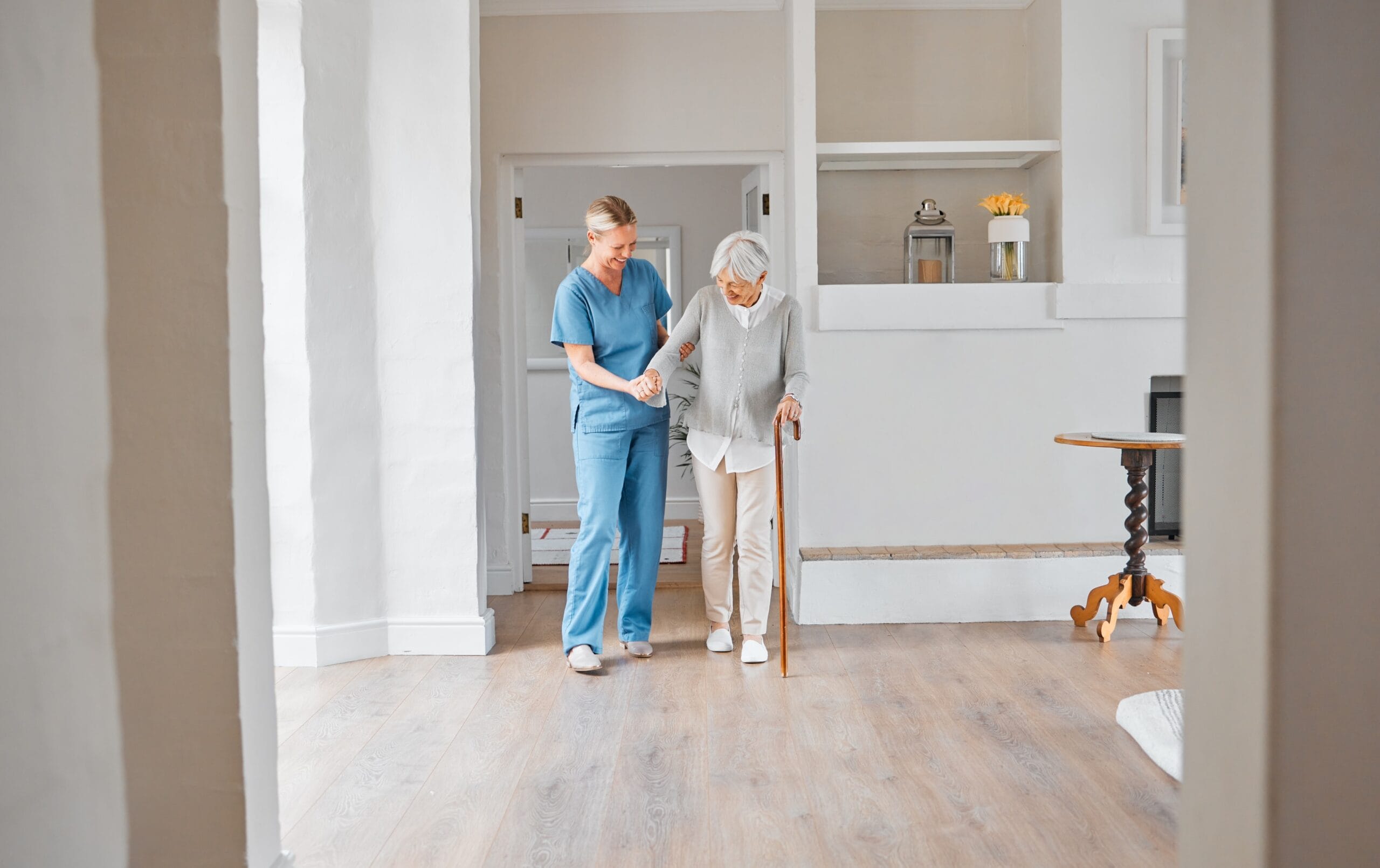
Family members and carers can learn cueing techniques—rhythmic counting, visual targets, gentle verbal prompts—to help during freezing or near-falls. Standing beside rather than in front of the person, offering an arm for balance rather than pulling, and staying calm all reduce the risk of triggering retropulsion or panic.
Social and Emotional Wellbeing
Joining a Parkinson’s exercise group or community balance programme offers benefits beyond muscle strength: social connection, shared problem-solving and motivation to keep moving. Many elderly fallers who participate in group exercise report improved confidence and reduced fear of future falls.
The central message is this: even though walking is difficult with Parkinson’s, a combination of dopaminergic medication, targeted physical therapy, environmental changes and daily cueing strategies can make walking safer and more stable. Early professional assessment—rather than waiting for severe mobility loss—gives the best chance of preserving independence and preventing serious injury.
Summary
Parkinson’s walking difficulties arise from the loss of dopamine in the basal ganglia, which disrupts the brain’s capacity to generate automatic, well-coordinated steps. This leads to a characteristic Parkinsonian gait marked by shuffling steps, shortened stride length, a stooped posture, reduced arm swing, and compromised balance. Additionally, episodic challenges such as freezing of gait and gait festination introduce unpredictability and substantially increase the risk of falls.
The motor symptoms of Parkinson’s disease—including tremor, rigidity, and bradykinesia—along with cognitive factors like attention deficits, all play significant roles in contributing to these gait disturbances. Freezing and fixation episodes are often triggered by environmental factors such as doorways, turning, narrow spaces, or situations involving time pressure and anxiety.
Notably, these gait issues can persist even when medication effectively manages other symptoms. Clinical assessment typically involves a combination of observational techniques, timed walking tests, and occasionally three-dimensional gait analysis to tailor treatment approaches.
Effective management encompasses practical strategies such as the use of external cues (visual, auditory, and verbal), modifications to the environment, and education for caregivers to help reduce freezing episodes and improve gait function.
Rehabilitation programs that include task-specific gait training, strength and balance exercises, and cueing-based therapies have demonstrated positive outcomes. For some patients, appropriately selected walking aids can prevent falls, and advanced treatments like deep-brain stimulation may offer benefits. Daily living adjustments—such as allowing extra time for activities, avoiding rushing, sitting during tasks, and participating in exercise groups – also support sustained mobility.
A proactive, combined approach of medication optimisation, skilled physiotherapy, and consistent practice provides the best opportunity to maintain walking independence, decrease fall risk, and preserve quality of life as the disease progresses.